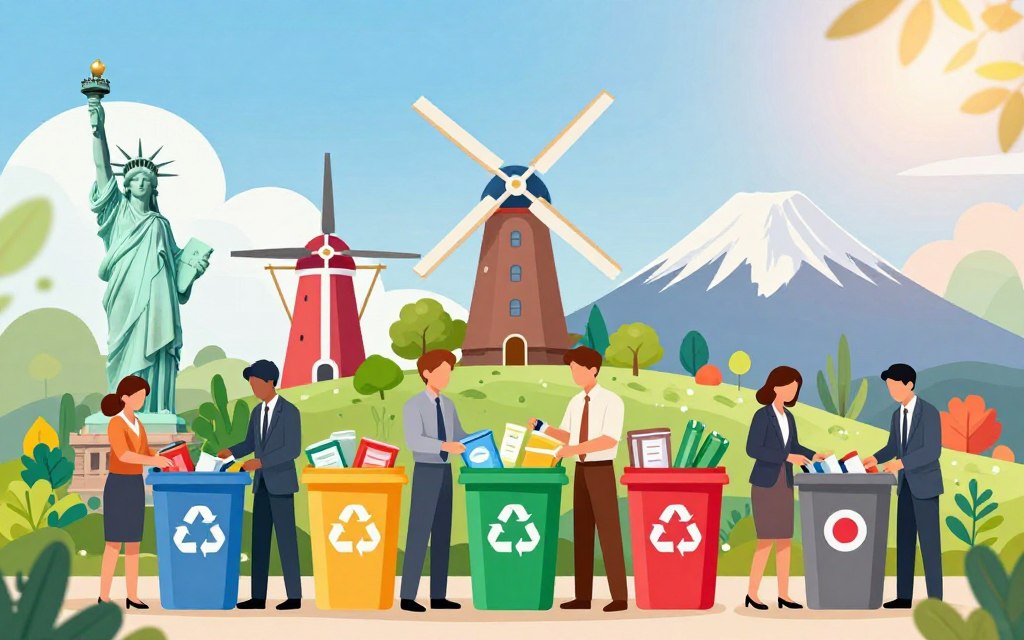
Which countries are best at recycling? Germany, Austria, South Korea, Belgium, Switzerland, Sweden, the Netherlands, and Norway rank highly. Their systems work well, but rankings vary by materials measured and methods used.
Even top recycling countries need more than household participation. They need collection, sorting, processing, producer responsibility, deposit-return systems, composting, and strong waste-prevention policies. Together, these parts create a successful recycling system.
This article compares the United States with the best recycling nations listed above. It explores measurable outcomes and the policies that drive their success.
Global recycling rankings have no single definitive list. Countries report municipal waste, packaging waste, and total waste using different methods and timeframes. That complexity adds depth to our evaluation of global recycling performance.
Key Takeaways
- Germany and Austria lead in recycling rates, with strong systems in place.
- Effective waste management includes sorting, processing, and composting.
- The U.S. ranks 30th globally, with significant variation across states.
- Recycling methodologies differ, impacting global rankings.
- Countries like Taiwan and Singapore excel in waste recovery in Asia.
Why Recycling Matters on a Global Scale
Global recycling matters beyond basic waste management. It protects the environment and supports climate change and recycling goals. Recovering paper, metals, glass, and plastics reduces virgin extraction and saves energy and water.
Well-managed recycling systems reduce landfill demand and pollution. This supports the circular economy by keeping materials in use longer. Recycling is important, but it is only one part of a wider waste hierarchy.
The environmental benefits of recycling grow through waste reduction: reducing consumption, designing durable products, and composting organic materials. The global growth of municipal solid waste highlights the urgent need for effective waste management strategies. Poor practices can cause litter, ocean pollution, and hazardous conditions affecting public health and the environment.
“Recycling is an essential part of sustainable development.”
How Countries Measure Recycling Success
Understanding how countries measure recycling helps explain global trends. Key measures include the recycling rate, collection rate, recovery rate, reuse rate, and waste diversion rate. These recycling measurement methods show different parts of the process.
The recycling rate shows the percentage of materials recycled from all waste generated. The collection rate measures waste collected for recycling, regardless of its final destination. A country may collect much material but fail to recycle it all because of contamination or unsuitable materials.
The recovery rate shows the share of waste recovered for reuse or recycling. The reuse rate covers materials used again without significant processing. The waste diversion rate includes efforts that keep waste from landfills, including recycling and composting.
Some datasets cover only municipal waste, while others cover specific materials or packaging. The reporting year, measurement boundaries, and whether composting is included can affect reported figures. Compare similar data, and treat rankings as useful indicators, not definitive league tables.
Different sources may report different national rates because of these factors. Understanding these details builds trust and explains why recycling statistics differ between reports.
Which Countries Are Best at Recycling?
Several recycling leaders rank among the countries with the highest recycling rates and support sustainable waste management. This international recycling comparison highlights their successful systems.
Germany
Recycling Rate and Key Statistics
The Germany recycling rate reaches approximately 67% for municipal waste. The German recycling system relies on strict rules and public education. The Green Dot system supports packaging recycling Germany by promoting responsible disposal.
Programs That Drive Germany’s Success
Germany requires households to separate recyclable materials. Local services collect paper, glass, and organic waste, keeping materials from landfills. Plastic waste and contamination still create challenges.
Austria
Recycling Rate and Key Statistics
The Austria recycling rate is around 58%, making Austria a leading European recycling nation. The Austrian recycling system depends on Austria waste separation and active public participation.
Programs That Drive Austria’s Success
Accessible centers and public campaigns support recycling in Vienna. Austria also promotes composting and efficient use of resources through its organized waste system.
South Korea
Recycling Rate and Key Statistics
The South Korea recycling rate is about 53% for municipal waste. South Korea food waste recycling is especially advanced and offers a model for other nations.
Programs That Drive South Korea’s Success
The pay-as-you-throw system encourages households to create less waste. The phrase pay as you throw Korea describes this approach. Korean waste management also supports food waste sorting through strict rules and community action.
Belgium
Recycling Rate and Key Statistics
The Belgium recycling rate is approximately 54%. Belgian waste management combines producer responsibility with separate collection. These methods strengthen Belgium packaging recycling.
Programs That Drive Belgium’s Success
Services collect paper, glass, and organic waste from homes. Recycling parks and local programs add support. Fost Plus manages packaging waste and helps maintain strong public participation.
Switzerland
Recycling Rate and Key Statistics
The Switzerland recycling rate is around 52%, supported by strong public involvement. The Swiss recycling system uses Switzerland waste separation and the polluter pays principle.
Programs That Drive Switzerland’s Success
Collection points accept materials such as electronics and textiles. Retail take-back programs recover more materials. Swiss deposit recycling also supports responsible disposal.
Sweden
Recycling Rate and Key Statistics
The Sweden recycling rate is approximately 49%. Swedish waste management uses advanced systems and focuses on waste-to-energy. Sweden also gives priority to material recycling.
Programs That Drive Sweden’s Success
The Swedish recycling system offers broad municipal collection services. Education encourages public participation. Sweden waste-to-energy programs and biogas recovery from organic waste support sustainability.
Netherlands
Recycling Rate and Key Statistics
The Netherlands recycling rate is about 45%. The country supports the Netherlands circular economy through waste separation and efficient resource use.
Programs That Drive the Netherlands’ Success
The Dutch recycling system uses source separation and sorting after collection. Dutch waste separation helps the country pursue its circularity goals and sustainable waste management.
Norway
Recycling Rate and Key Statistics
The Norway recycling rate is around 40%. The Norwegian recycling system includes Norway deposit return programs for beverage containers. The country has improved collection across its regions.
Programs That Drive Norway’s Success
High container redemption rates show the strength of Norwegian waste management. Municipal systems handle organic waste and hazardous materials. Remote communities and difficult logistics remain challenges.
Common Strategies Behind Top Recycling Nations
Top recycling nations use several strategies to raise recycling rates. A key factor is convenient collection. Easy access to bins, drop-off points, and clear instructions helps residents separate materials correctly, supporting successful recycling strategies.
Source separation keeps material streams clean and makes recycling more efficient. Advanced sorting facilities help, but they cannot replace careful household sorting. Nations that prioritize source separation often report higher recycling rates and better-quality recyclables.
Many leading nations use extended producer responsibility (EPR), a producer responsibility policy. This policy shifts financial and operational duties for packaging and products from municipalities to producers. It encourages companies to design recyclable products and supports circular economy policies.
deposit return programs encourage consumers to return bottles and cans for refunds. They can greatly increase recycling rates. Pay-as-you-throw fees and landfill restrictions also promote responsible waste management.
Public education also plays a vital role. When citizens understand recycling’s importance, they are more likely to participate actively. Reliable enforcement of recycling regulations supports compliance and encourages community involvement.
Finally, successful recycling nations invest in recycling infrastructure and processing capacity. They also build stable end markets for recovered materials. Transparent measurement helps countries track what is collected, rejected, recycled, reused, composted, exported, or burned.
In conclusion, high-performing countries combine regulation, economic incentives, infrastructure, product design, and citizen participation. No single policy explains their success. They apply multiple strategies consistently over time.
Policy and Legislation Driving Recycling Success
Recycling success depends on strong policy and laws. Countries that recycle well often use comprehensive recycling legislation with clear standards and goals. These laws create the conditions that help recycling systems grow.
One important approach is extended producer responsibility laws. These laws make manufacturers responsible for products throughout their lifecycles, including disposal and recycling. They encourage companies to design products that are easier to recycle and create less waste.
Many nations also use packaging regulations that require new products to contain minimum recycled content. This rule increases recycled-material use and creates a steady market for recovered materials. Meanwhile, Waste policy can include deposit-return laws and pay-as-you-throw programs, which make recycling more rewarding for consumers.
Norway and Switzerland use strict environmental compliance measures to ensure that recycling meets high standards. These measures often define recyclable materials, set enforceable targets, and impose penalties for noncompliance.
By contrast, the United States faces challenges because its recycling policies are fragmented. Each state, county, and city may follow different rules, which makes a national strategy difficult. Without a shared approach, effective recycling becomes harder.
Legislation alone is not enough. It also needs enough funding, processing capacity, and reliable data. Public communication helps teach citizens recycling practices and encourages participation.
Effective policy and legislation align businesses, governments, and households around measurable waste-reduction goals. By studying South Korea and the European Union, the United States can improve its recycling framework. Read this study on recycling best practices, and learn how to write an informative essay on recycling here.
Challenges Even Recycling Leaders Face
Even the world’s top recycling nations face major hurdles. These recycling challenges can weaken waste management and lower recycling rates.
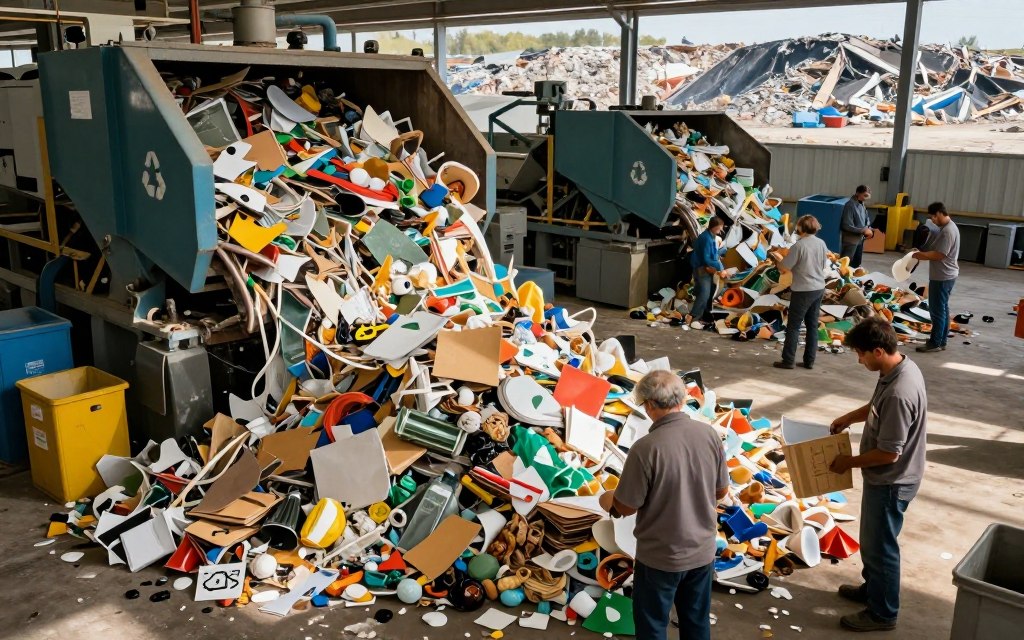
One major issue is recycling contamination. It happens when people place non-recyclable items, such as food residue or wrongly sorted materials, in recycling bins. Contamination can ruin whole batches, creating more plastic waste and lowering recycling efficiency.
Many materials, including multilayer packages, films, and textiles, are hard-to-recycle materials. They often cost too much to process, creating waste backlogs that systems cannot manage well.
recycling market demand also changes, while unstable commodity prices affect recycling programs. When demand for recycled materials falls, countries may struggle to sell processed goods.
Collection, transport, and processing can also harm the environment and reduce recycling’s benefits. Rising consumption and increased packaging often cancel out gains in recycling rates.
Nations need better product design, improved reuse systems, and stronger data transparency. A complete approach is essential because recycling is only one part of a broader circular-economy strategy.
| Challenge | Description | Impact |
|---|---|---|
| Recycling Contamination | Non-recyclable items mixed with recyclables | Increased waste, lower recycling rates |
| Market Demand | Fluctuating prices for recycled materials | Economic viability of recycling programs |
| Hard-to-Recycle Materials | Items that are difficult or costly to process | Accumulation of waste, reduced recycling efficiency |
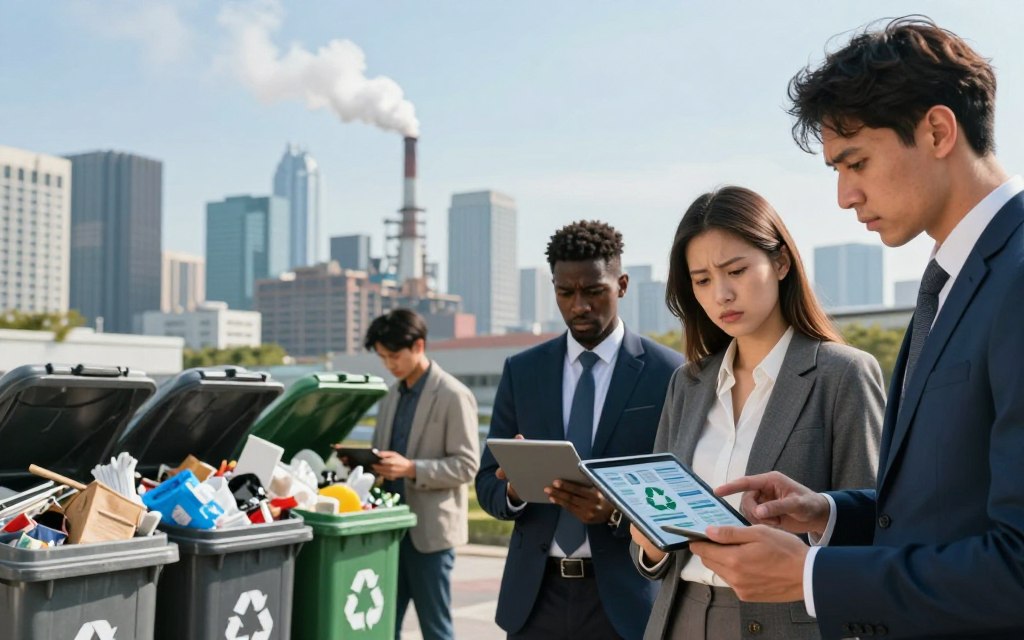
How the United States Compares to Top Recycling Nations
The United States recycling rate shows mixed results beside global leaders. The U.S. recycling system is well established, but results vary greatly by region.
Some communities use innovative practices and achieve impressive recycling results. However, the national system remains fragmented.
This fragmentation creates differences in curbside access, accepted materials, and local contracts. Many states also face contamination standards and limited processing capacity.
These problems lower participation in some areas and affect overall EPA recycling statistics. Unlike countries with standard sorting rules and deposit systems, the U.S. lacks one cohesive strategy.
An America recycling comparison shows strengths, including advanced facilities and private-sector investment. It also shows weaknesses, such as mixed-material collection.
The U.S. must address these differences to improve its recycling efforts. By learning from leading nations, it can strengthen its municipal recycling initiatives.
Stronger municipal recycling in the United States can also improve overall waste management.
Lessons the United States Can Learn from Recycling Leaders
The U.S. can improve recycling in the United States by studying successful programs in other nations. These nations have used effective U.S. recycling solutions to raise recycling rates and reduce waste. The U.S. can adapt these ideas for a more efficient, sustainable system.
Recycling policy lessons show why services should be consistent and easy to use. This matters for multifamily housing, rural communities, schools, and underserved areas. National or state minimum standards for accepted materials can simplify recycling and reduce resident confusion.
Clear labels and stronger contamination feedback can teach proper recycling methods. These practices may increase public participation, while deposit-return systems can improve beverage container recovery rates. Together, these steps make recycling easier and more effective.
Extended producer responsibility (EPR) can help fund packaging collection, sorting, and processing. It also encourages manufacturers to design recyclable products, supporting an American circular economy.
Investment in composting, organics collection, and domestic reprocessing is crucial. These efforts support recycling and help create markets for recycled content. Standardized data reporting can also improve transparency and accountability.
Federal, state, local, and private-sector coordination is necessary. No single municipality can solve national packaging and infrastructure problems alone. By studying recycling best practices in leading nations, the U.S. can develop adaptable strategies for its geography and market conditions.
| Recycling Strategy | Country Example | Potential Impact in the U.S. |
|---|---|---|
| Deposit-Return Systems | Germany | Increased beverage container recovery rates |
| Extended Producer Responsibility | Sweden | Funding for recycling infrastructure |
| Clear Labeling | South Korea | Improved public participation |
The Role of Citizens in Recycling Success
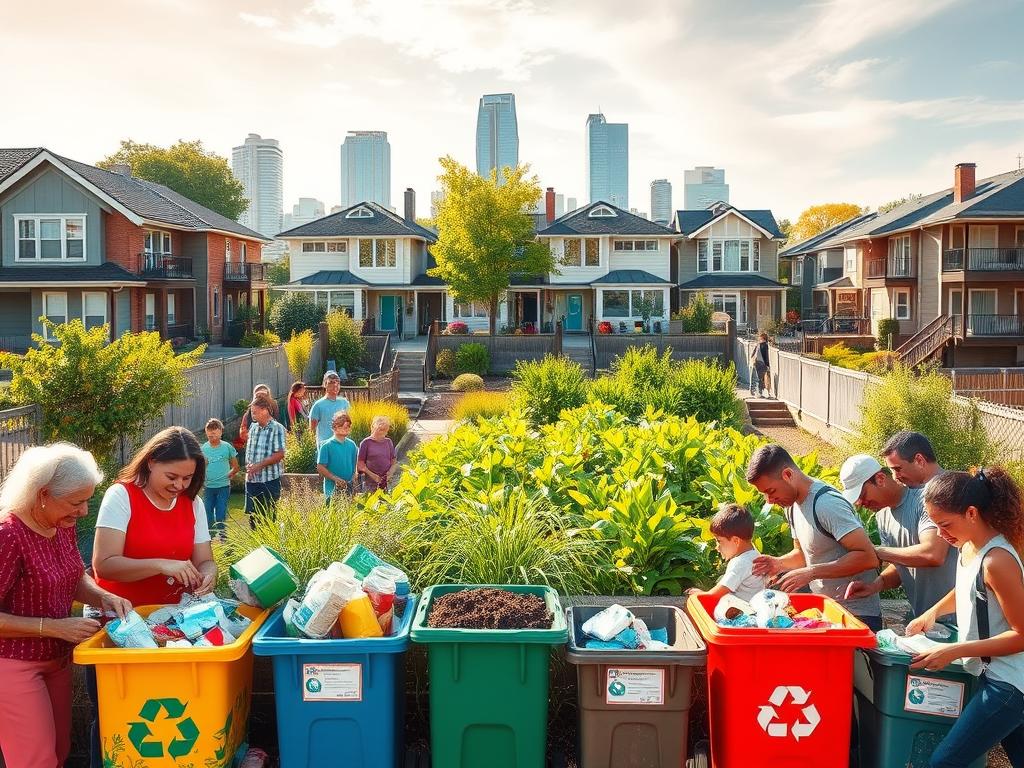
Citizens help determine whether recycling programs succeed. Consumer recycling behavior shapes results through buying, sorting, and participation. Recycling education helps people make informed choices.
Understanding how to recycle correctly is crucial. Local rules may differ from universal recycling symbols, so residents should follow them. Keeping recyclables empty, clean, and dry supports good household recycling habits.
Keep batteries, electronics, and chemicals out of regular recycling bins. Use deposit-return programs or retailer take-back initiatives instead. These choices support proper waste management and local recycling efforts.
The principles of reduce, reuse, recycle support the reduce reuse recycle approach. Choosing durable products, repairing items, and buying goods made from recycled materials all help. Less packaging also reduces waste at the source.
Residents should support accessible recycling services in their communities. They can ask landlords, employers, and local officials for better recycling options. Individual household recycling habits cannot fix poor systems or unclear rules.
| Action | Impact | Tips |
|---|---|---|
| Sort Recyclables | Improves processing efficiency | Follow local guidelines |
| Use Take-Back Programs | Reduces landfill waste | Check with retailers |
| Advocate for Services | Enhances community recycling | Engage with local officials |
Citizens are vital partners in the recycling system. Their engagement can improve results, but communities must address system-wide challenges together. Informed choices and effective policies can help create a more sustainable future.
The Future of Global Recycling
The future of recycling looks promising because technology is advancing and sustainability remains a priority. As we move from traditional waste management toward a circular economy, key innovations shape the circular economy future.
One major development is advanced recycling technology. It includes better optical sorting and robotics, which improve material recovery. Artificial intelligence also identifies materials more accurately, helping recyclables receive correct processing.
Moreover, reusable packaging is gaining support. Products designed for disassembly and fewer material combinations can strengthen recycling systems. This approach reduces waste and creates steady demand for recycled feedstock.
However, technology alone cannot solve every challenge. We must prevent waste and support sound product design. Recycling innovation must also work with sustainability policies, including packaging taxes and producer-responsibility laws.
Looking ahead, recycling success will depend on transparent lifecycle assessments. These assessments will ensure new technologies are judged by total environmental impact, not just collection or processing volume.
In conclusion, the future of recycling is bright because innovation and shared sustainability efforts are growing. By using these advances, we can build an efficient, responsible recycling system for the planet and future generations.
For more recycling insights, explore the common materials that can be recycled.
Key Takeaways from the World’s Top Recycling Nations
The top recycling countries offer recycling lessons for stronger global waste management. Their best recycling systems combine convenient collection, clear rules, and producer responsibility. They do not depend only on household enthusiasm.
Germany excels with strong packaging and separation infrastructure. Austria emphasizes organized collection and strong producer responsibility; South Korea uses innovative food-waste and pay-as-you-throw systems. Belgium focuses on regional collection and effective packaging programs.
Switzerland’s polluter-pays model encourages accountability, while Sweden’s integrated waste treatment promotes efficiency. The Netherlands champions a circular-economy approach. Norway’s deposit-return success shows effective consumer engagement.
Compare recycling rates carefully because definitions can vary significantly. For the United States, key recycling lessons include improving consistency, expanding access, and supporting domestic markets. Standardized data and stronger organics management are crucial for sustainable waste solutions.
Recycling thrives when it is convenient for residents, economically supported, and technically realistic. It must also support reduction and reuse efforts.
Conclusion
This conclusion shows which countries are best at recycling: Germany, Austria, South Korea, Belgium, Switzerland, Sweden, the Netherlands, and Norway. These global recycling leaders excel in different measures and materials, showing that recycling success takes many forms.
Effective systems offer easy collection, separate sorting, and strong public participation. These features support sustainable waste management and improve recycling rates.
No nation has completely solved its waste challenges. Recycling must support prevention, reuse, and responsible product design.
Recycling in America has significant room for improvement. Better access, consistent rules, and stronger markets for recycled materials can improve results.
Communities can expand composting programs and create policies that hold producers responsible for their products. The recycling future in America depends on cooperation among governments, businesses, and households.
Individual actions matter, but shared responsibility remains vital for effective recycling systems.